
Can You Epoxy Over a Cracked or Damaged Garage Floor?
Can You Epoxy Over a Cracked or Damaged Garage Floor?
The Prime Team · 30 July 2026
Short answer: usually yes. Cracks are one of the most common reasons people call us, and most of the floors we walk into have them. A cracked slab is rarely the end of the story.
But it does change what has to happen first — and it's worth understanding why, because this is the part that decides whether your floor still looks good in ten years.
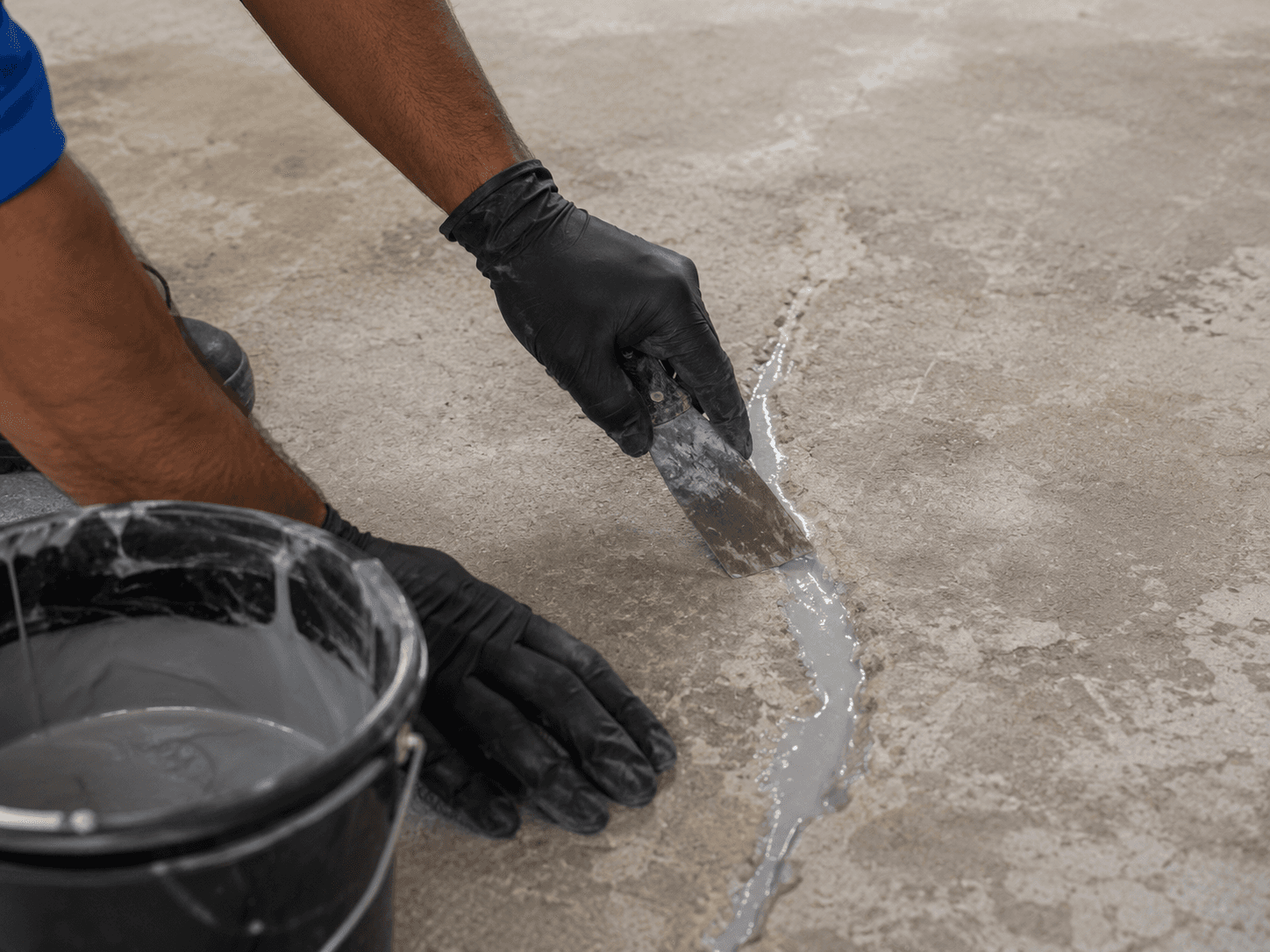
Epoxy doesn't fill cracks
This is the bit that surprises most people.
Epoxy is self-levelling, so it's easy to assume it flows into a crack and closes it up. It doesn't. It sits over the top, and the crack is still there underneath. Give it a few months and it starts to show through — a faint line at first, then a proper split once the slab moves again.
Worse, an unfilled crack is a path for moisture. Water vapour travels up through the slab, gets trapped under the coating, and pushes it off the floor. That's where the bubbling and peeling you've probably seen on other people's garage floors comes from.
So cracks get dealt with before anything else goes down. Not covered — repaired.
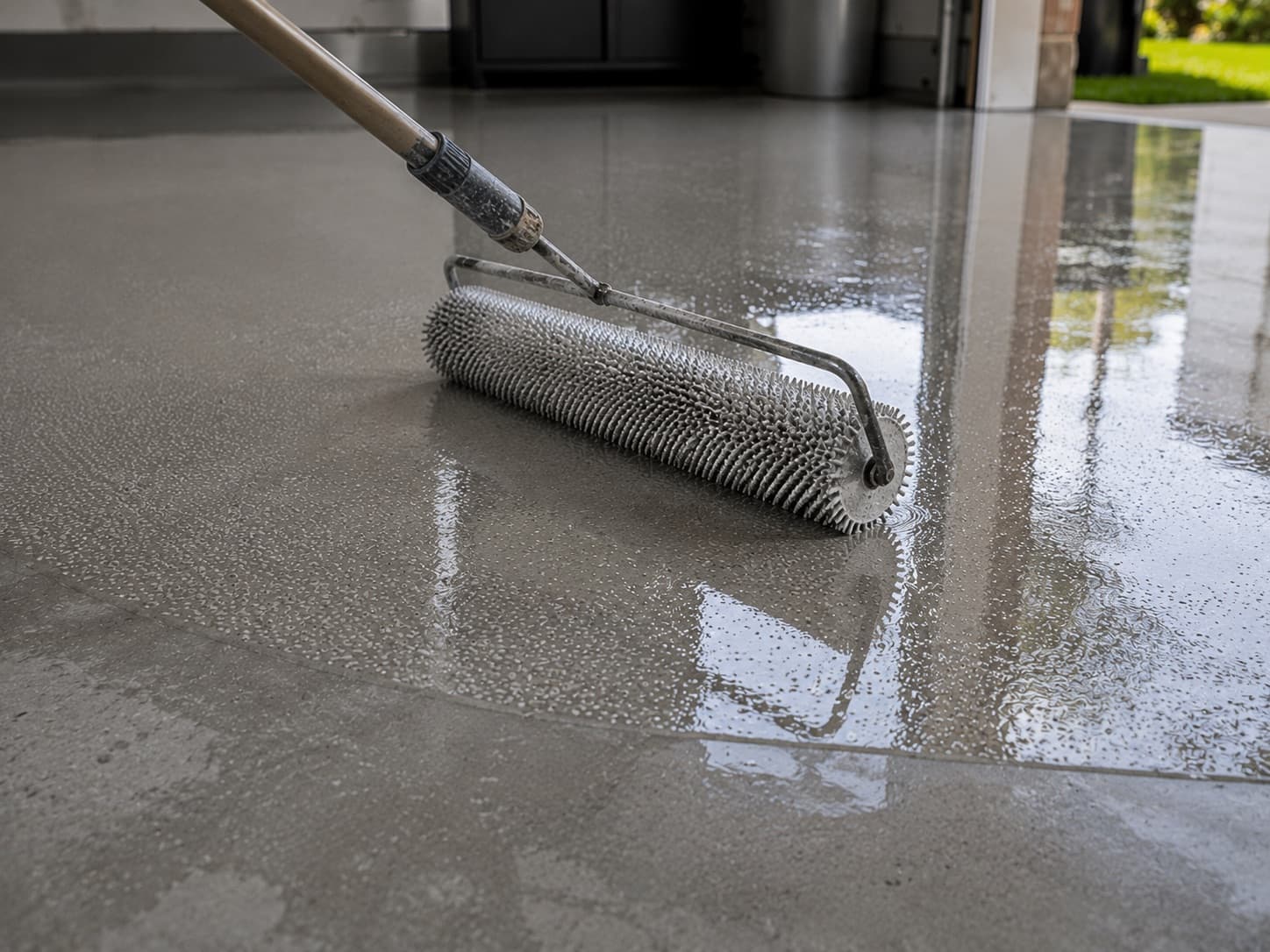
What we actually do with them
Every crack gets opened up first. It sounds backwards, but you have to widen a crack before you can fix it properly. We run a grinder along it to cut it open and clear out the loose, crumbling concrete at the edges, so the filler has something solid to grip and can get down deep instead of sitting on the surface.
Then it gets filled with a proper structural filler that bonds chemically to the concrete, and it's ground back flush with the rest of the floor.
What we don't use is the stuff in a tube from the hardware store. Latex and acrylic fillers are made for cosmetic touch-ups. They stay soft, they flex too much, and epoxy laid over the top of them peels away. Same with builder's caulk. It'll look fine for a season and then let go.
The filler also has to cure fully before the coating goes on. Rush that and you trap moisture underneath, which brings you right back to bubbles.
Oil-saturated concrete
Long-term oil contamination is a genuine problem, not just a cosmetic one, because epoxy will not bond to a surface that is saturated with it. Grinding removes the affected layer. Where oil has penetrated deeply — common in older workshops and mechanical bays — it may need more aggressive treatment, and occasionally we will tell you a specific area needs extra work.
When a slab genuinely is not suitable
There are real cases. Structural movement that is still active will keep cracking whatever you put on top; that is a slab problem to solve first. Severe rising moisture will push a coating off from underneath no matter how good the product is, so we assess for it before specifying a system — sometimes the right answer is a different specification rather than more coats.
Get it looked at before assuming
We have coated plenty of floors owners had written off. A free site visit costs you nothing and gives you a straight answer either way — including, if it comes to it, that your slab needs work before it is worth coating.