
Epoxy vs Polished Concrete: Which Should You Choose?
Epoxy vs Polished Concrete: Which Should You Choose?
The Prime Team · 25 July 2026
These two get compared constantly, and they're often presented as if one is simply better. They're not. They solve different problems, and the right answer usually comes down to your slab and what you're doing in the space.
Here's the honest difference.
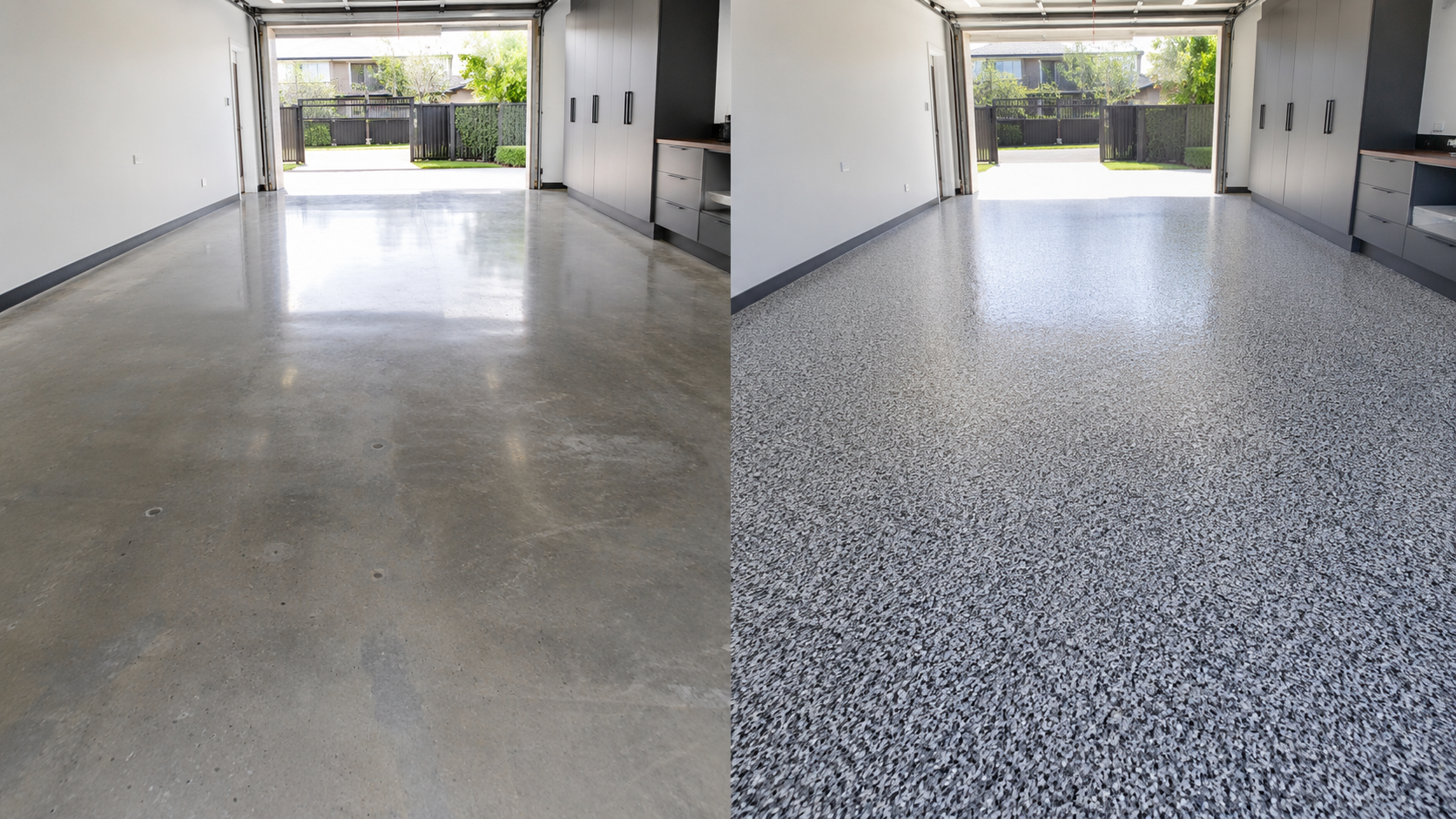
THEY WORK IN OPPOSITE DIRECTIONS
Polished concrete is your existing slab, refined. It gets ground with progressively finer diamonds and chemically hardened until the surface itself is smooth and glossy. Nothing is added on top — the finish is inthe concrete.
Epoxy is a coating. Primer, colour, flakes, clear topcoat, built up in layers over the slab. The finish is on the concrete.
What polished concrete does well
Because it is the slab, there's nothing to peel. No coating to lift, delaminate or bubble. It's essentially permanent, and it handles decades of use. When the sheen dulls in the busy areas, a machine pass brings it back.
It's also usually cheaper, because there are no coating materials — just tooling and time. And it lets the slab breathe, which matters if there's moisture coming up from below.
The catch: it shows you exactly what you've got. Every patch, every old repair, every colour variation in the concrete stays visible. On a beautiful slab that's the appeal. On a garage floor that's been patched three times, it's not.
What epoxy does well
Epoxy hides what's underneath. That's the practical reason most garage owners choose it — the slab they're standing on isn't something they want to look at.
It also gives you a sealed, chemical-resistant surface. Oil, petrol, brake fluid and salt sit on top and wipe off rather than soaking in. And you choose how it looks: colour, flake blend, gloss or satin.
The catch: it's a bonded layer, so it depends entirely on the bond. If the prep was rushed, or if moisture is rising through the slab, it can lift. Epoxy failures are almost never the product — they're the preparation underneath it.
It also wears rather than lasting forever. A good system in a residential garage gives you well over a decade before the busy areas want a recoat.
What we'd suggest
We do epoxy. We're not going to pretend we're neutral about that — but we're also not going to talk you into it if your slab is better suited to polishing, because a floor that doesn't suit the space isn't a job we want.
Send us a photo of your floor and what you use the space for. If we think polishing is the better fit, we'll tell you, and point you to someone who does it.
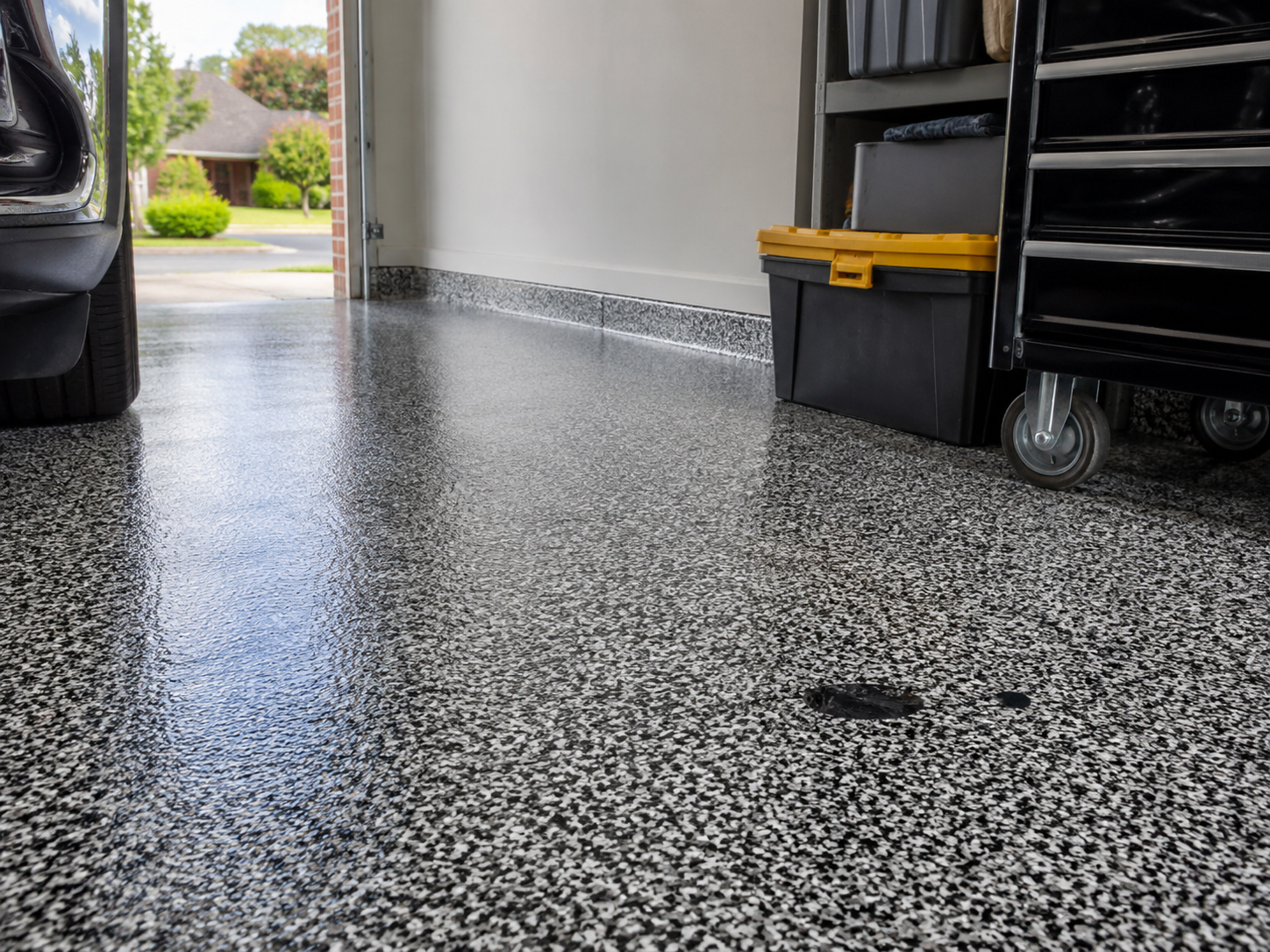
WHICH ONE FOR A GARAGE
For most garages, epoxy is the more practical choice — and that's not us being biased, it's what garages do to floors.
You're parking a hot car on it. You're dropping tools. There's oil, and in winter there's whatever came off the road. That's chemical exposure and impact load, and a coating handles that better than a polished surface does. The flakes also give you grip, which polished concrete doesn't naturally have.
Polished concrete makes more sense if you've got a sound, good-looking slab, you like the industrial look, and the space isn't taking vehicle traffic — a workshop, a studio, a shed you've converted.
WHAT YOUR SLAB DECIDES
Before either option, the slab has a say.
Moisture rising through the concrete is the one thing that rules epoxy out. A coating traps it and lifts. Polished concrete lets it pass. If you've got damp patches that never dry, that needs testing first.
A slab that's been patched a lot points to epoxy, because polishing will show every one of those patches.