
Epoxy Flooring and Melbourne Weather: UV, Heat and Moisture
Epoxy Flooring and Melbourne Weather: UV, Heat and Moisture
The Prime Team · 04 August 2026
A floor that would last decades inside a sealed warehouse can fail within a couple of summers in a Melbourne carport. Same product, same installer — different conditions.
Three things about this city decide what a floor actually needs.
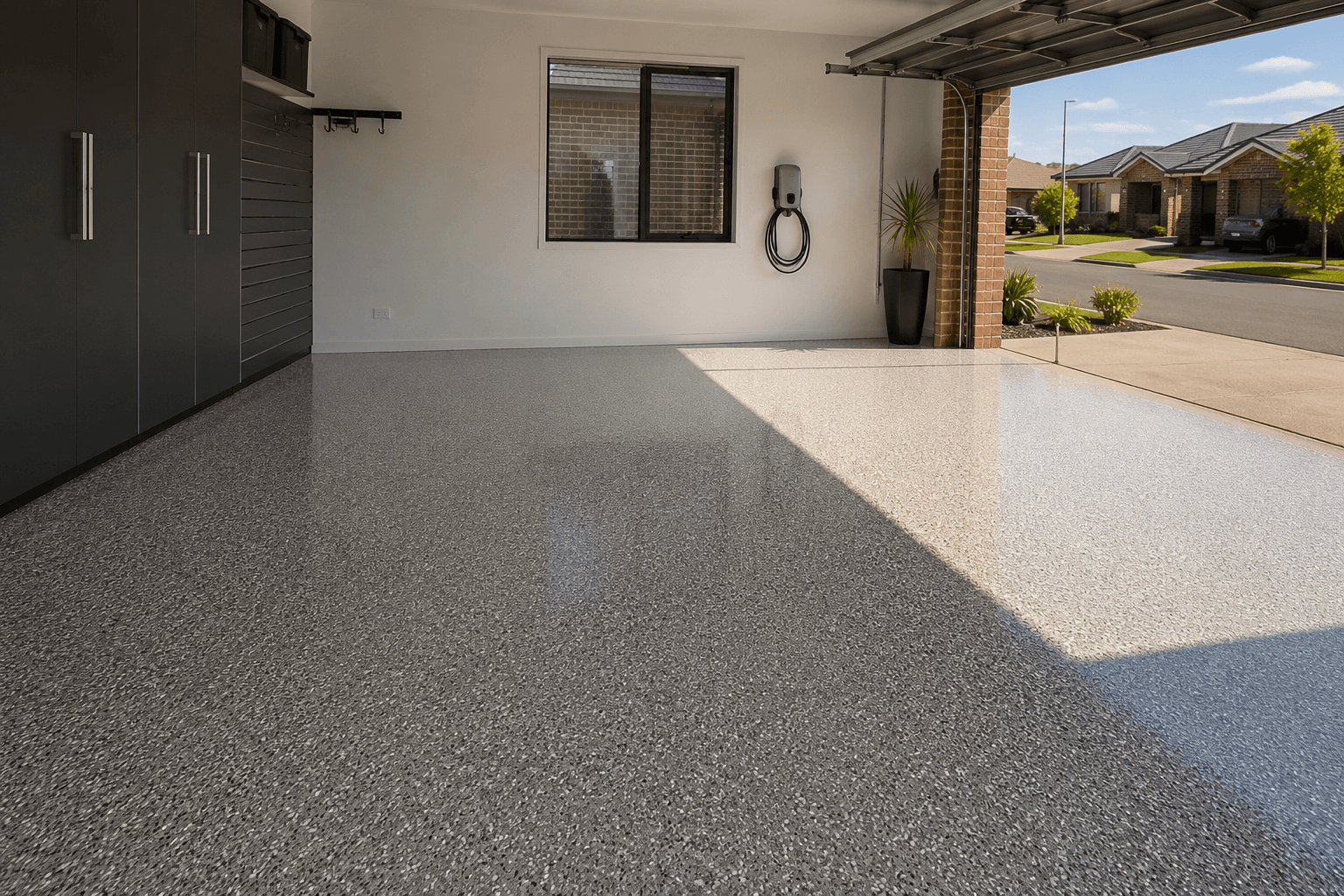
Sunshine
Standard epoxy isn't UV stable. In direct sun it ambers and chalks, and it does it unevenly — so you end up with a floor that has gone yellow in patches wherever the sun reaches, and stayed grey everywhere else.
The obvious places are patios and alfresco areas. The ones people miss are roller-door thresholds, where afternoon sun reaches a few metres into the garage, and anywhere with a skylight.
Anywhere that sees direct sun needs a UV-stable top coat. We use UV-stable polyurethane on every floor, so this is handled — but tell us where the sun reaches anyway, because it affects what we'd recommend for that section.
Temperature swings
Melbourne can move through a fifteen-degree range in a day, and that affects two things.
While we're working. Heat shortens the window we have to spread a coat before it starts going off. Cold slows the curing right down. We plan around the actual forecast rather than a fixed timetable, which occasionally means we'd rather move a job by a day than rush a coat that won't harden properly.
Afterwards. The concrete under the coating expands and contracts as the temperature changes. That's normal, and a floor built properly moves with it. Where you see failure first is at control joints that weren't handled correctly.
Moisture coming up through the slab
This is the one that catches people out, because you can't see it until it's already a problem.
Water vapour rising through concrete exerts real pressure underneath a coating. It doesn't matter how good the product is — over time it pushes the floor off the slab. It usually shows up as bubbles or as a patch that lifts at the edge.
The usual candidates are older properties without an effective damp-proof membrane, slabs sitting at or below the surrounding ground level, and garages built into a slope.
What to look for: damp patches that never quite dry out, a musty smell, white powdery residue on the concrete, or an existing coating that has already lifted somewhere.
If any of that sounds like your floor, say so when you contact us. It's the single most useful thing you can tell us, and it changes what we'd recommend — sometimes to a different system, occasionally to advice that a coating isn't the right answer at all.
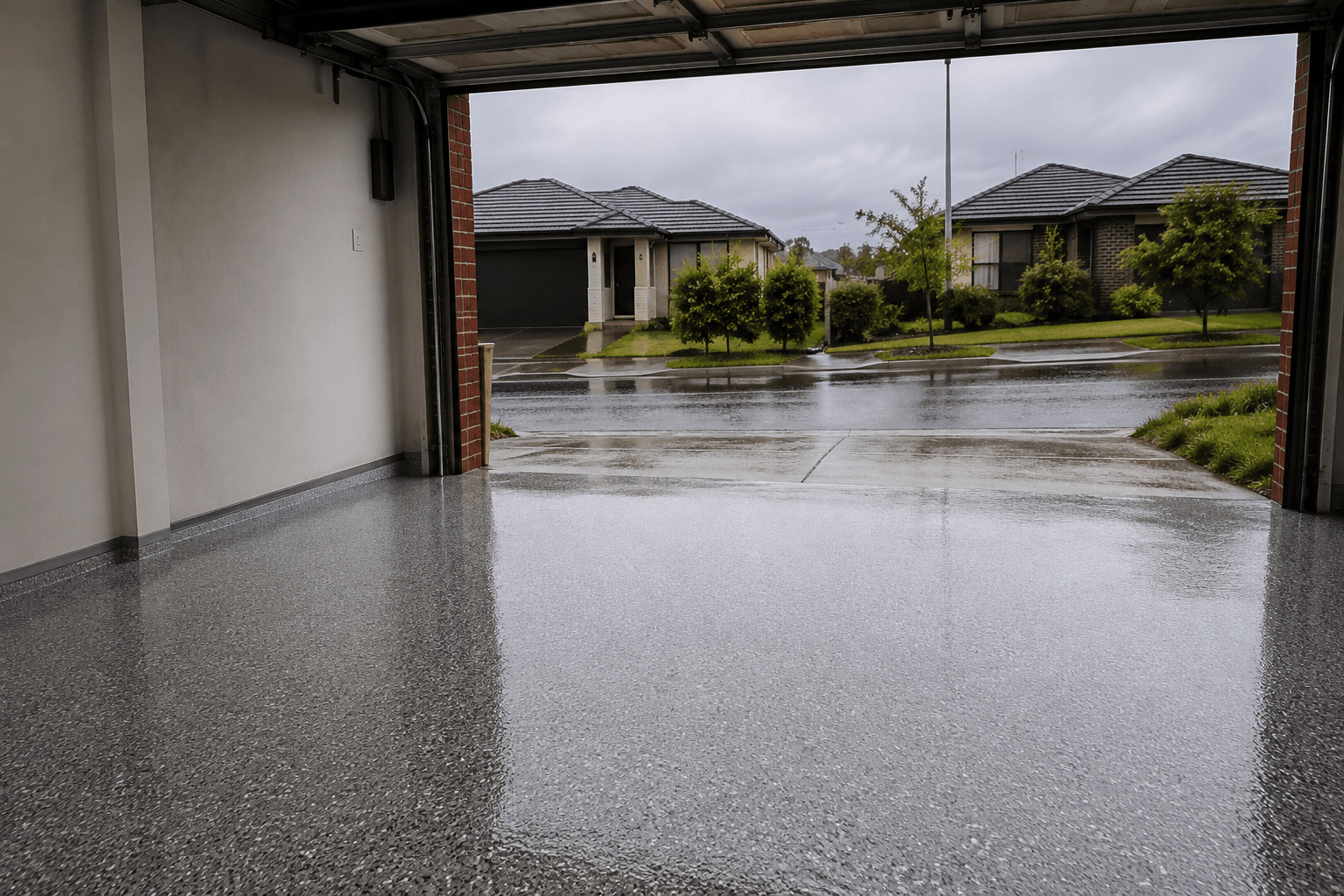
Closer to the bay
Around Point Cook, Werribee South and down towards Geelong, salt in the air is another factor for anything exposed or semi-exposed. It doesn't rule anything out — it just makes the case for a properly sealed system stronger.
Why we ask questions
For most garages, a photo and a few details are enough for us to give you a price. But the things on this page don't show up in a photo.
So when you get in touch, tell us where the sun hits, whether the space is at ground level or below it, and whether you've ever noticed damp. It takes you thirty seconds and it's the difference between a quote that holds and one that changes on the day.